








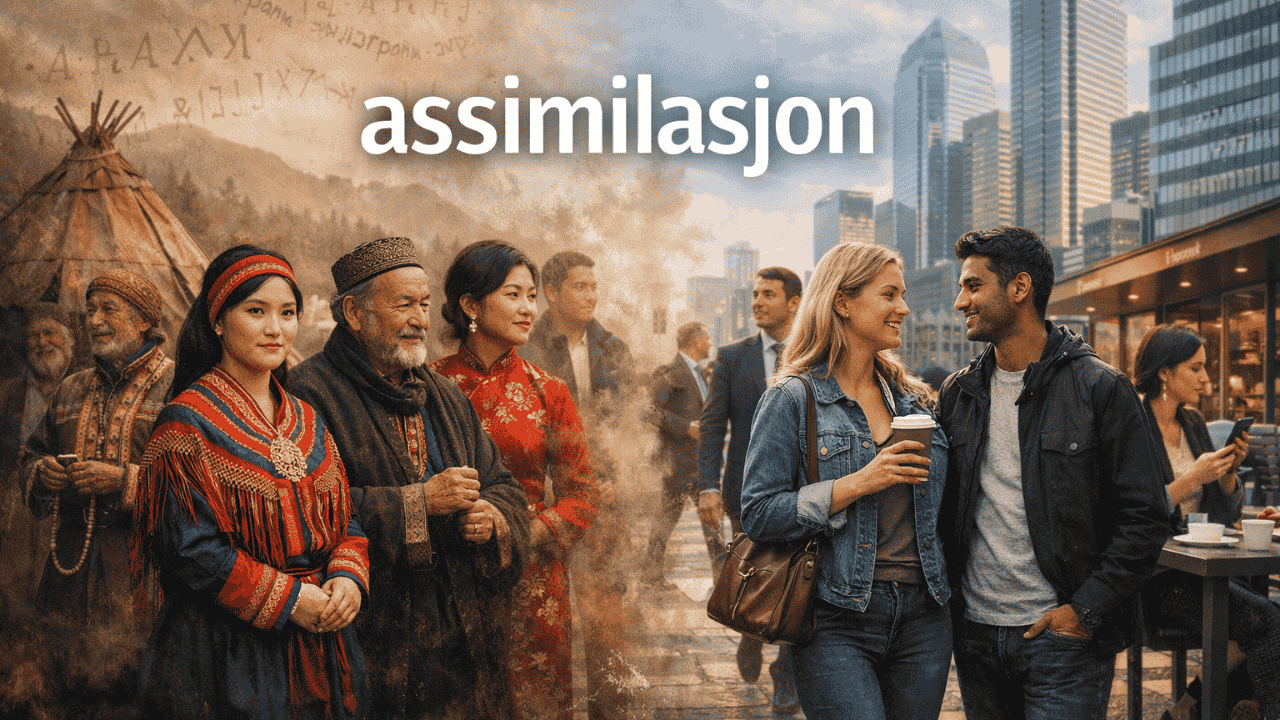
Assimilasjon is a concept that sits at the center of discussions about culture, identity, and social change. It describes what happens when individuals or groups begin to adopt the language, values, and behaviors of a dominant society. This process can be gradual, subtle, or sometimes enforced through external pressure. In modern societies shaped by migration and globalization, assimilasjon continues to influence how people belong and how cultures evolve. Understanding assimilasjon helps explain both personal identity shifts and broader societal patterns.
what assimilasjon really means in everyday life
Assimilasjon is often explained in simple terms as becoming similar to the majority group. In practice, it goes beyond surface-level changes and touches deeply on how people think, behave, and interact. When someone goes through assimilasjon, they may change how they speak, dress, or celebrate traditions. Over time, these changes can reshape how they see themselves and how others perceive them.
This process is not always visible at once, but it builds slowly through daily interactions. For example, a person moving to a new country might begin by learning the local language, then adopt social norms, and eventually feel more connected to that society than their original one. Assimilasjon is not just about fitting in; it often involves navigating expectations and balancing identity.
types of assimilasjon and how they differ
Assimilasjon does not happen in a single form, and different types help explain how the process unfolds. Each type focuses on a different aspect of life and integration. Understanding these distinctions makes it easier to write about assimilasjon with clarity and depth.
- Cultural assimilasjon involves adopting traditions, language, and customs of the dominant group
- Social assimilasjon refers to forming relationships and becoming part of social networks
- Structural assimilasjon includes access to education, jobs, and institutions
- Forced assimilasjon happens under pressure or policy, while voluntary assimilasjon occurs by choice
These types often overlap, and most people experience more than one at the same time. For instance, someone might adopt a new language quickly but still hold onto their original traditions at home. This layered experience makes assimilasjon complex rather than a simple shift from one identity to another.
how assimilasjon develops over time
Assimilasjon is rarely immediate and usually unfolds across stages. It begins when two cultures come into regular contact, often through migration, education, or work. At first, individuals may only adjust certain behaviors to communicate and function in the new environment. Over time, these adjustments become habits, and deeper changes start to take place.
The process can extend across generations, with children often assimilating faster than their parents. This creates differences within families, where younger members may feel more connected to the dominant culture. Assimilasjon can lead to a gradual fading of original customs, especially when those traditions are not actively maintained. Despite this, many people try to balance both identities instead of fully replacing one with another.
real-world example of assimilasjon in history
One of the strongest examples of assimilasjon comes from historical policies aimed at reshaping minority groups. In Norway, the government once pursued a policy that encouraged the assimilation of the Sámi people into mainstream Norwegian culture. This included discouraging the use of the Sámi language and promoting Norwegian identity in schools and public life.
The impact of this form of assimilasjon was significant and long-lasting. Many people lost their connection to their original culture and language, sometimes without fully realizing it. Over time, this led to a decline in cultural practices and a shift in identity for entire communities. This example shows how assimilasjon can go beyond personal choice and become a tool of control.
assimilasjon compared to similar concepts
Assimilasjon is often confused with related ideas, but there are important differences that shape how it should be understood. These distinctions are useful when writing a detailed article that explains the topic clearly.
- Assimilasjon means adopting the dominant culture, often at the cost of original identity
- Acculturation involves cultural exchange without fully losing original identity
- Multiculturalism supports coexistence of multiple cultures without forcing change
These concepts highlight different ways societies handle diversity. While assimilasjon pushes toward uniformity, multiculturalism allows differences to remain visible and valued. This contrast often sparks debate about what kind of society is more inclusive or sustainable.
benefits often associated with assimilasjon
Assimilasjon can offer certain advantages, especially in terms of social and economic integration. People who adapt to the dominant culture may find it easier to communicate and build relationships. This can open doors to education, employment, and broader opportunities.
In many cases, assimilasjon reduces barriers that might otherwise limit participation in society. A shared language and understanding of norms can make daily life smoother and less stressful. It can also help individuals feel a stronger sense of belonging in their new environment. However, these benefits often come with trade-offs that are not always immediately visible.
challenges and downsides of assimilasjon
Despite its potential advantages, assimilasjon also carries serious drawbacks. One of the most significant concerns is the loss of cultural identity, which can leave individuals feeling disconnected from their roots. This loss can affect not only individuals but entire communities over time.
There is also the issue of pressure, where people feel they must change in order to be accepted. This pressure can come from institutions, workplaces, or social expectations. In some cases, assimilasjon creates inequality by valuing one culture over others. These challenges make assimilasjon a topic that requires careful and balanced discussion.
assimilasjon in modern society
In today’s globalized world, assimilasjon continues to shape how people move and adapt across borders. Migration has made cultural interaction more common, increasing the relevance of this concept. Many countries still expect a certain level of assimilasjon for newcomers to fully participate in society.
At the same time, there is growing awareness about preserving cultural identity. People are more willing to question whether assimilasjon should be the goal or if coexistence is a better approach. Technology and communication have also made it easier for individuals to stay connected to their original culture. This creates a more complex version of assimilasjon than in the past.
assimilasjon in language and communication
Assimilasjon is not limited to culture and society; it also appears in language. In linguistics, assimilasjon refers to how sounds change to become more similar to nearby sounds. This makes speech more natural and easier to pronounce over time.
For example, certain words may be spoken differently in fast conversation because of assimilasjon. These changes happen without conscious effort and are part of how language evolves. This linguistic aspect shows that assimilasjon is not just a social process but also a natural human tendency. It reflects how people adjust for efficiency and comfort in communication.
conclusion
Assimilasjon is a powerful concept that explains how people and cultures change through interaction. It can create opportunities for integration and belonging, but it also raises questions about identity and cultural loss. The process is not uniform and can vary depending on context, choice, and external pressure. From historical examples to modern migration, assimilasjon continues to shape societies in visible and invisible ways. Understanding assimilasjon allows for a more honest conversation about how people adapt and what they give up in the process.
faqs
what is assimilasjon in simple terms
Assimilasjon means adopting the culture, language, and behavior of a dominant group, often leading to reduced connection with one’s original culture.
is assimilasjon always voluntary
No, assimilasjon can be voluntary or forced depending on social, political, or historical conditions.
how is assimilasjon different from acculturation
Assimilasjon involves deeper cultural replacement, while acculturation allows people to keep their original identity while adapting.
why is assimilasjon important today
Assimilasjon remains important because migration and globalization continue to bring different cultures into close contact.
can assimilasjon be reversed
In some cases, people and communities try to reconnect with lost traditions, but full reversal is often difficult once changes are deeply rooted.