









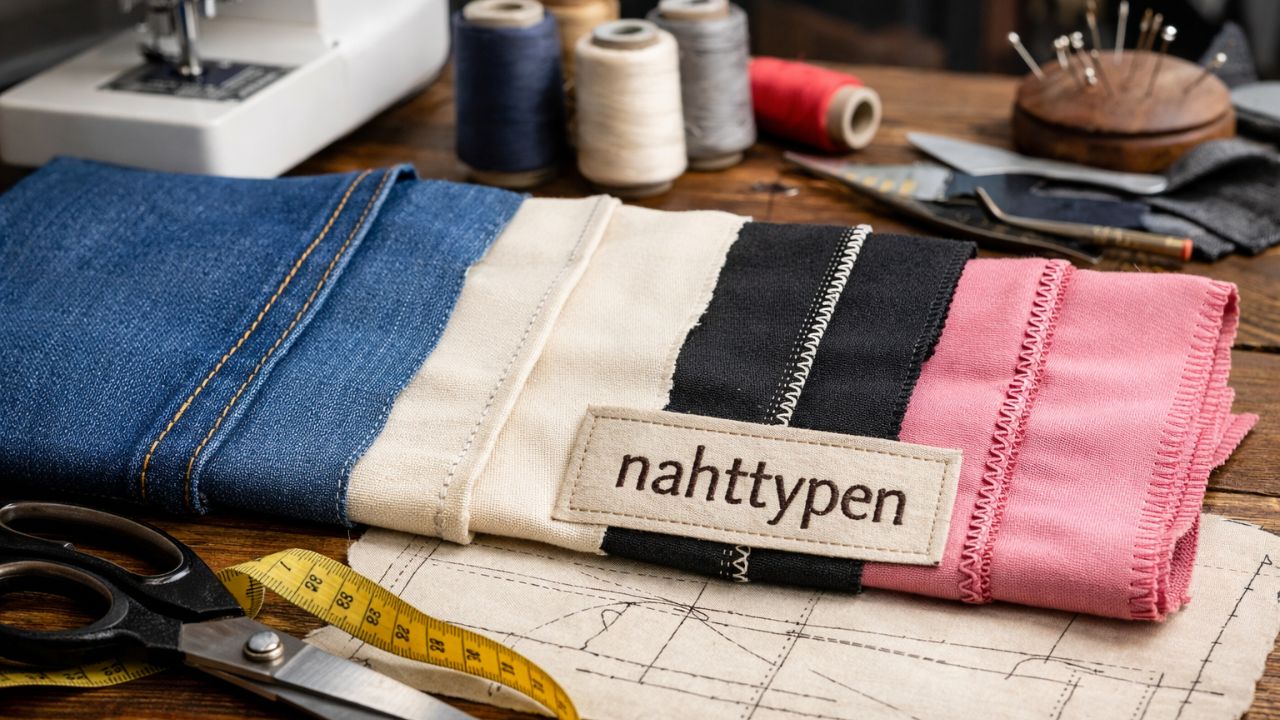
Most sewing problems don’t come from bad fabric or cheap thread. They come from lazy seam choices. People rush through construction, default to the same stitch every time, and then wonder why garments twist, tear, or wear out after a few washes. Getting nahttypen right fixes half those problems before they even start. Good sewing isn’t just about neat stitches. It’s about knowing which seam belongs where—and refusing to use weak ones where strength matters.
Why nahttypen Decide Whether Clothing Lasts
Fabric gets blamed for a lot of failures. In reality, weak nahttypen cause most structural issues in garments. Seams carry tension every time a body moves. Sit down, bend an arm, stretch a shoulder—stress travels straight to the stitching.
When the wrong seam gets used, three things happen fast:
- seams pull open
- edges fray and unravel
- fabric puckers along the stitch line
Better nahttypen spread stress across the fabric instead of concentrating it in one fragile line.
That’s why workwear, denim, and sports clothing rely on stronger seam structures. They’re built with the assumption that the garment will be pulled, twisted, and washed repeatedly.
Cheap garments skip this thinking entirely. A single basic seam where a stronger one belongs can cut the life of clothing in half.
The nahttypen That Show Up in Nearly Every Garment
There are dozens of seam constructions in tailoring and textile production. In practice, only a handful of nahttypen carry most of the workload in everyday clothing.
Plain seam
This is the backbone of garment assembly. Two pieces of fabric are placed right sides together and stitched along the edge.
Plain seams show up everywhere:
- shirts
- skirts
- dresses
- pillowcases
- curtains
The problem isn’t the seam itself. The problem is when people rely on it for everything.
Plain seams need finishing. If raw edges stay exposed, fraying will start within a few washes. That’s why many manufacturers pair plain seams with zigzag stitching or serging.
French seam
When clean interiors matter, French seams earn their place.
Instead of leaving raw edges exposed, the seam gets enclosed inside two lines of stitching. That creates a smooth interior finish and prevents fraying entirely.
French-style nahttypen work best with lightweight fabrics like:
- chiffon
- silk
- voile
- lightweight cotton
Try using them on heavy fabrics and the seam becomes bulky. This is where beginners often get it wrong.
Flat-felled seam
Denim owes its durability to this seam.
Flat-felled nahttypen fold one seam allowance over the other and stitch it flat against the fabric. The raw edges disappear inside the fold, and the seam gains two rows of stitching.
This design handles serious tension.
That’s why it appears in:
- jeans
- work shirts
- uniforms
- outdoor gear
Turn a pair of jeans inside out and you’ll see this seam running down the legs.
It’s not decorative. It’s structural.
Zigzag seam
Stretch fabric changes the rules. A straight seam can snap under tension when knit fabric stretches.
Zigzag nahttypen solve that problem.
The side-to-side stitch pattern allows fabric to stretch without breaking the thread. That flexibility keeps seams intact in garments that move constantly.
Zigzag stitching appears in:
- leggings
- athletic wear
- knit tops
- swimwear
Without flexible seams, stretch garments would split the first time someone pulls them on.
Overlock seam
Walk through a clothing factory and you’ll hear the constant buzz of overlock machines.
Overlock nahttypen stitch, trim, and finish edges at the same time. The machine cuts excess fabric while wrapping thread around the edge.
The result is fast and clean production.
Overlock seams dominate modern manufacturing because they:
- prevent fraying
- allow moderate stretch
- work quickly in assembly lines
They show up in T-shirts, sweatshirts, and nearly every knit garment sold today.
When Fabric Dictates the nahttypen
The smartest sewing decision happens before the machine turns on. Fabric determines which seams make sense.
Ignore that rule and construction falls apart.
Lightweight fabrics
Thin fabric behaves differently under tension. Heavy seam constructions can distort it.
Better choices include:
- French seams
- narrow plain seams
- lightweight overlock seams
These keep fabric smooth without adding bulk.
Heavy fabrics
Denim, canvas, and twill demand stronger nahttypen. Weak seams will split under stress.
Reliable options include:
- flat-felled seams
- reinforced plain seams
- lapped seams
These spread tension across multiple stitch lines.
Stretch fabrics
Knit garments move with the body. Seams must stretch with them.
The strongest approach combines:
- zigzag stitching
- overlock seams
- stretch stitch patterns
Rigid seams belong nowhere near knit fabric.
The nahttypen That Beginners Overuse
New sewists often fall into one habit: using the same seam everywhere.
The usual culprit is the plain seam. It’s easy and fast, so it becomes the default for every project.
That approach leads to predictable problems.
Weak stress points
Shoulders, crotch seams, and armholes experience constant tension. Weak seam construction there guarantees early failure.
Fraying edges
Raw edges left unfinished will unravel. After several washes, seams begin to open.
Fabric distortion
Certain seams pull fabric out of shape when they aren’t suited for the material.
Understanding nahttypen fixes all three problems before they appear.
Decorative nahttypen That Also Serve a Purpose
Not every seam hides inside a garment.
Some exist to be seen.
Welt seams
A welt seam creates a raised ridge along the stitch line. It appears frequently in jackets and upholstery.
The ridge adds structure and visual definition.
Bound seams
In bound seams, raw edges get enclosed in a strip of fabric or binding tape.
This method is common in:
- unlined jackets
- high-end garments
- visible interior finishes
Bound nahttypen turn the inside of clothing into something worth showing.
Lapped seams
Instead of placing fabric edges together, one piece overlaps the other.
This seam appears in:
- leather garments
- heavy coats
- outdoor gear
The overlap creates strength and eliminates exposed edges.
Where Industrial Sewing Uses nahttypen Differently
Home sewing focuses on appearance. Industrial sewing focuses on speed and durability.
Factories choose nahttypen based on three priorities:
- production speed
- structural reliability
- machine compatibility
That’s why overlock seams dominate factory garments. They’re fast, consistent, and strong enough for most clothing.
High-stress areas sometimes receive additional reinforcement.
For example:
- bar tacks at pocket corners
- double stitching along seat seams
- reinforced shoulder seams
Factories treat seam construction like engineering. Each seam carries a specific load.
Choosing nahttypen for Real Projects
There’s no universal seam that works everywhere. The right choice depends on three questions.
First: how much stress will the seam carry?
Second: how heavy is the fabric?
Third: will the seam be visible?
Answer those honestly and the correct seam usually becomes obvious.
For example:
- a silk blouse benefits from French seams
- jeans require flat-felled seams
- athletic wear demands flexible zigzag or overlock seams
Ignore those relationships and sewing becomes a cycle of repairs.
Why Skilled Sewists Obsess Over nahttypen
Anyone can run fabric through a sewing machine.
Experienced sewists think about construction before the first stitch.
They look at fabric weight, tension points, and garment use. Then they choose nahttypen that match those conditions.
That attention separates clothing that survives years of wear from garments that fail after a season.
A shirt might look perfect on the outside. But the inside seams reveal whether the maker knew what they were doing.
The Real Lesson Behind nahttypen
Good sewing isn’t about decoration. It’s about structure.
The right nahttypen turn loose pieces of fabric into something durable enough for real life. They control fraying, distribute tension, and shape the way garments move.
Ignore seam construction and the rest of the work doesn’t matter. Perfect fabric, clean cuts, careful pressing—none of it saves a garment held together by weak seams.
Serious sewing starts with choosing seams that deserve the fabric they hold.
FAQs
Why do jeans almost always use flat-felled seams?
Jeans endure constant stress from sitting, bending, and walking. Flat-felled seams lock the raw edges inside the seam and add a second row of stitching, which dramatically increases durability.
Can nahttypen affect how comfortable a garment feels?
Yes. Bulky seams can rub against skin, especially under arms or along waistlines. Lightweight seams such as French seams reduce friction in delicate garments.
Why do factory T-shirts almost always use overlock seams?
Overlock machines stitch and finish edges at the same time. That speed makes them ideal for mass production while still producing seams that stretch with knit fabric.
Are decorative seams weaker than structural seams?
Not always. Some decorative seams, like welt seams, also reinforce fabric layers. Others exist mainly for appearance and should not be used in high-stress areas.
What seam should be used for stretch leggings?
Flexible seams are essential. Zigzag or overlock nahttypen allow the fabric to stretch without breaking the thread, which prevents seams from snapping during movement.